
When Holland travels: Dutch tulips at the gates of Belgrade
LocalDutchWays Blog — Belgrade, Serbia — 13 April 2026
There are moments when you leave the bollenstreek behind and find it waiting for you somewhere else entirely. This was one of them.
We were in Belgrade for a few days, flying in on a grey April morning. From the window of the plane, the landscape below looked familiar in a way that took a moment to place: flat, grid-like fields stretching towards the horizon. Not the bollenstreek, but the same kind of geometry. Land that has been organised, measured, cultivated. A different country, but the same human instinct to make something of the soil.
From the airport to the hotel
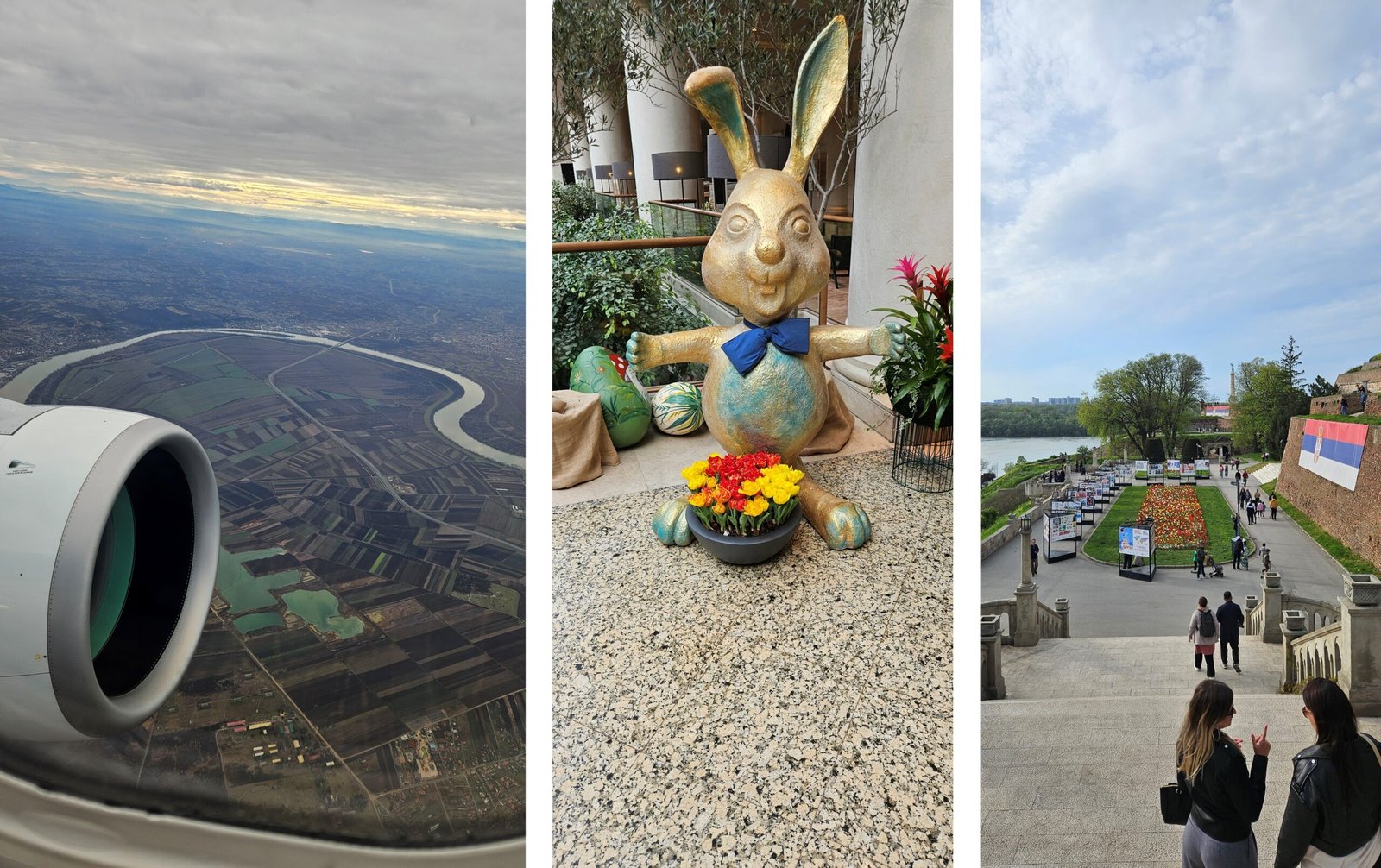
The first surprise came before we had even unpacked. The hotel lobby was full of flowers. Hyacinths, narcissus, tulips in terracotta pots: exactly the kind of arrangement you would expect to find in a Dutch garden centre in March. The Easter bunny holding a bowl of tulips in the entrance was perhaps less expected, but entirely welcome.
It was not a coincidence. As part of a collaboration between the Royal Netherlands Embassy and the city of Belgrade, tens of thousands of tulip bulbs had been planted across the city that spring. In the hotel, in public squares and along the main avenues. Wherever you looked, there were Dutch flowers.
Through the centre
We walked into the city centre that afternoon. The streets were lined with large planters, each one filled with tulips in full bloom. Red, yellow, white, purple: the same varieties you see in the fields around Sassenheim in April, here on the pavements of Belgrade. Locals walked past without a second glance. Tourists stopped to photograph them. We just smiled.
The connection runs deeper than decoration. The collaboration is part of a Green Cities initiative, focused on urban greening, biodiversity and public space in Belgrade. One of the tulip varieties planted that spring was developed in the Netherlands specifically for the project: a new cultivar named Jelisaveta, after the first female architect in Serbian history. A Dutch flower with a Serbian name, planted at the heart of a Balkan capital.
Kalemegdan
We ended the afternoon at Kalemegdan, the old fortress that sits above the confluence of the Sava and the Danube. It is one of those places that earns its reputation. The walls are ancient, the views are wide, and the park that surrounds it is one of the finest in the Balkans.
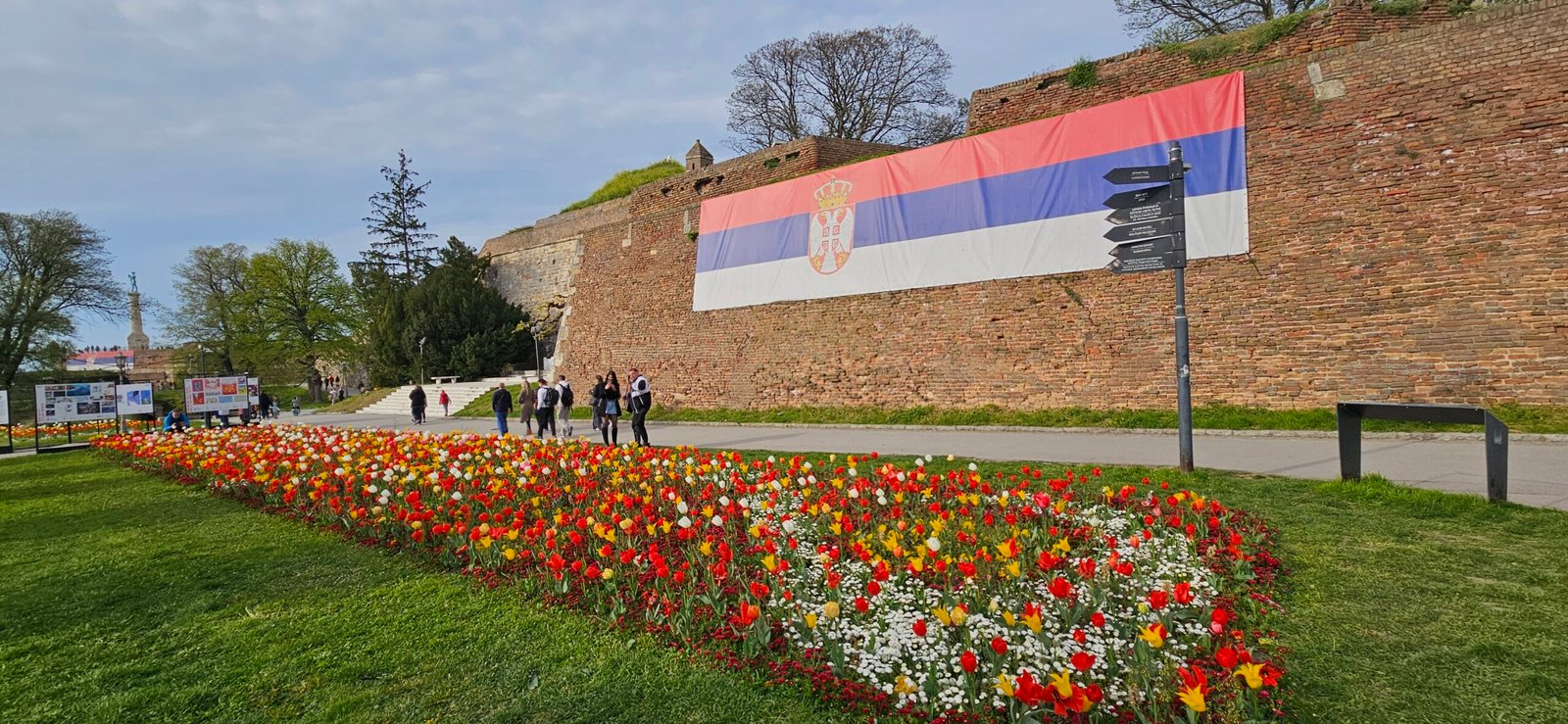
And there, along the base of the fortress wall, beneath an enormous Serbian flag, was a tulip field. Thousands of them, planted in sweeping rows of red, yellow and white, exactly as you would find them in a field outside Lisse in the third week of April. The scale of it stopped us. We had not expected this. We had come to Belgrade for other reasons, and Holland had followed us here.
Why this matters for LocalDutchWays
The bollenstreek is a place. But the flowers it grows travel. They travel in the holds of aircraft, in refrigerated trucks, in diplomatic gifts and horticultural partnerships. They end up in hotel lobbies in Belgrade, in planters on Knez Mihailova Street, in the park of a medieval fortress overlooking two rivers.
Standing there, at the foot of Kalemegdan: the pride of Serbia, one of the great fortresses of Europe, visited by millions every year. And right there, in front of its ancient walls, a field of Dutch tulips in full bloom. We felt genuinely proud. Proud that something grown in the fields around our village had found its way here, to this place, in this country. It is a small thing, perhaps. But it meant something.
This is the other side of what we do. LocalDutchWays exists to bring visitors into the bollenstreek, to show them what it means to live here, to share the local knowledge that makes a place more than its postcard. But occasionally the bollenstreek comes to you. And when it does, it is worth paying attention.
Want to see more photos? Follow us on Instagram: @localdutchways